As summer draws to a close, we caught up with Richard Croucher, Vice Chairperson of YACWAG and member of the Land Management Committee, to hear how the season has unfolded across the reserves – from new projects and wildlife highlights to the challenges and plans ahead.
A Summer of Discovery at Maslens
“The main focus this summer,” Richard explained, “has been our work at Maslens, the new field we purchased on Kenn Moor at the end of last year.”
The team has been busy observing the reserve’s flora and insect life, with encouraging butterfly numbers and promising signs for the future. The field, adjacent to the original Kenn Moor site, showed a healthy spread of rushes – a good omen for overwintering snipe, which depend on wet conditions.
“The older field holds water better because its drains were broken years ago,” Richard noted. “Having one field wetter than the other gives the snipe options if conditions change – that’s really positive.”
There’s also been progress on improving habitats for other species. “We’ve installed a barn owl box in the stable building – it wasn’t used this year, which we didn’t expect, but barn owls have been seen in the area,” said Richard. “We’re hopeful for the future.” A bat survey is also underway, with plans to adapt part of the building for Lesser Horseshoe bats.
And not all the work has been glamorous – finding the reserve’s hidden water meter and stopcock took three visits from Bristol Water. “It’s one of those practical but essential jobs,” Richard laughed. “That’s land management for you!”
Wildlife Highlights and Community Involvement
One of the standout moments of the summer came during a dragonfly and damselfly walk at Congresbury Moor, led by expert Chris Cardno. “We spotted a hairy dragonfly – a real highlight,” Richard said. “It’s one of the species that gives the Biddle Street SSI its special status, so finding one was exciting.”
The event also inspired Richard to create a new Insect WhatsApp group, following the success of the existing bird group. “I’d like to organise monthly insect transects next year,” he said. “It’s a great way to record species and see how things change over time.”
Challenges of a Drought Summer
This summer’s long dry spell has had clear impacts across the reserves. “We’ve had no barn owls nesting at all this year,” Richard explained. “When the grass doesn’t grow, voles don’t breed and the owls know not to waste energy nesting.”
Other species have been affected too. “Our Stowey Reserve used to be full of Marsh marigolds,” he said. “Now we’re down to just a handful and it’s worrying.”
The drought also disrupted grazing. “Some fields dried out completely, leaving cattle without water and causing overgrazing in others,” Richard added. “And the dry ditches, vital for the reserves’ biodiversity, have suffered. We’ll have to see how the aquatic life recovers.”
Small Successes and Big Discoveries
Amid the challenges, there have been bright spots. Richard has used his extra time in retirement to increase moth trapping efforts. “We ran moth traps at Paddocks and Maslins reserves this year, twice overnight, and it’s something I’d like to repeat annually.”
One remarkable find came from Richard’s own garden: a Clouded buff moth, the first recorded in the Avon area since the 1800s. “It landed on my hand while I was photographing it!” he said. “That was a real thrill.”
Looking Ahead to Autumn and Winter
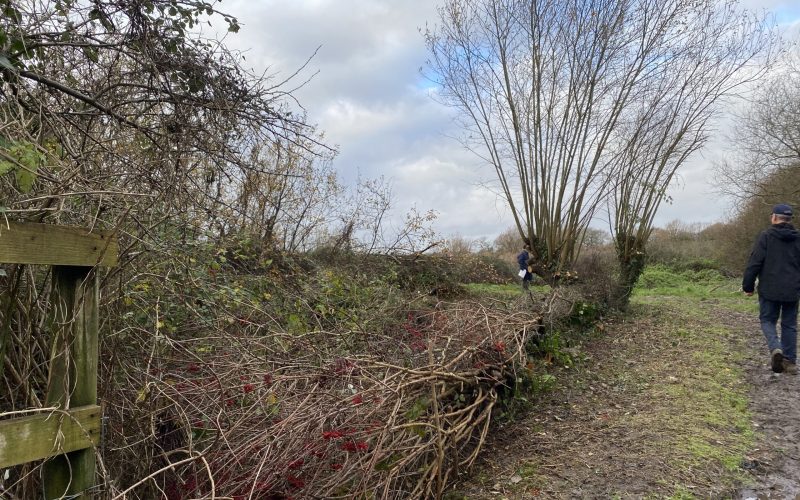
With dry ground making access easier, the team has already begun cutting back reeds at Footmead and the brambles in Newcroft, which threaten to overtake species-rich grassland. “We’re doing it in sections to keep balance – the brambles and reeds are valuable too,” Richard explained.
There’s also a full hedge-laying programme planned for winter, with growing numbers of volunteers joining weekly work parties. “It’s great to see more people getting involved,” he said. “There’s always plenty to do.”
As the seasons turn, YACWAG’s work continues – blending caring for nature, curiosity and community engagement to protect the landscapes and wildlife we all cherish.
If you can volunteer your time and help out with any of the projects YACWAG are involved in we’d love to hear from you.