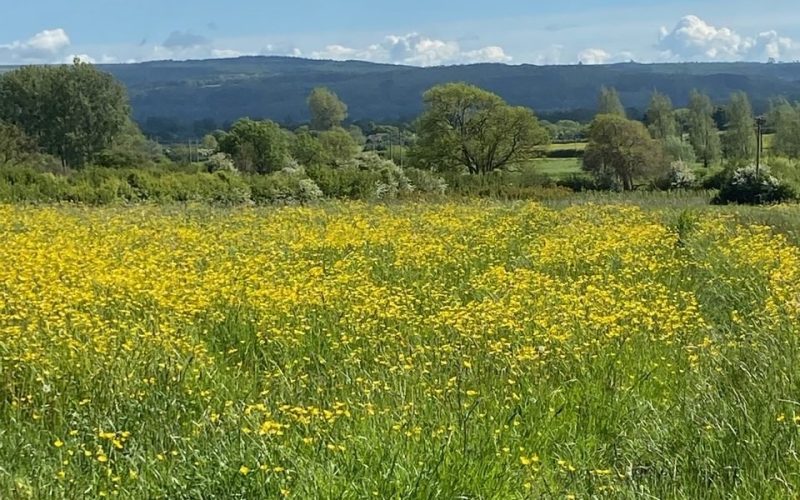
The results of the 2026 North Somerset Levels Breeding Bird Survey provide another valuable snapshot of bird populations across one of North Somerset’s most important wetland landscapes. The survey, which has been carried out almost every year since 1995, relies entirely on the dedication of volunteer surveyors who walk the same routes each spring, recording every bird seen and heard.
This year, volunteers surveyed 10 locations across the Levels and Moors, completing two visits to each site during the breeding season. In total they recorded 3,593 individual birds representing 61 species, a slight increase in the total number of birds compared with 2025 and another reminder of the importance of these wetlands for breeding wildlife.

The survey found encouraging signs for several species. Mallards and Moorhens continued to increase gradually, suggesting healthy wetland conditions, while Blue Tits, Great Tits, Robins and Wrens all enjoyed particularly successful breeding seasons. Wrens once again topped the list as the most frequently recorded species across all survey areas.
One of the most notable long-term trends continues to be the remarkable expansion of Cetti’s Warbler, with 54 records in 2026 compared with just 11 a decade ago. At the same time, Whitethroats experienced an excellent year after lower numbers in 2025, reflecting reports of a strong breeding season across much of the UK.
Not all the news was positive. Lapwings were absent for the second consecutive year, highlighting the continuing decline of this once-familiar breeding bird on the Levels. Bullfinches were also not recorded, while Goldfinches continued a recent downward trend and Chaffinch and Greenfinch numbers fell slightly following earlier recoveries.
Acknowledgements
The North Somerset Levels Breeding Bird Survey is only possible thanks to the enthusiasm, expertise and commitment of our dedicated team of volunteers. By giving their time to complete early morning surveys across the Levels and Moors each spring, they provide an invaluable long-term record of breeding bird populations that helps us better understand changes in our local wildlife and informs future conservation efforts. We are extremely grateful to everyone who contributed to this year’s survey.
Our sincere thanks go to: Trevor Riddle, Viv French, Dave Webber, Sue Hill, Emily Lomas, Dave Playle, Maggie Playle, Sue Chapman, Steve Chapman, David Lumkin, Irene Mills, Jean Carroll, Malcolm Taylor, Andrea Murray and Jon Thobroe. Special thanks also to Jon Thobroe for creating the survey recording forms, collating and analysing the data, and designing and producing the final report.